ယူရိုပါ (ဂြိုဟ်ရံလ)
ယူရိုပါ သည် ဂျူပီတာဂြိုဟ်အား လှည့်ပတ်လျက်ရှိသည့် ဂြိုဟ်ရံလတစ်စင်းဖြစ်ပြီး နေအဖွဲ့အစည်းတွင် ဆဌမမြောက် အကြီးဆုံး ဂြိုဟ်ရံလဖြစ်သည်။ ယူရိုပါအား ဂယ်လီလီယိုက ၁၆၁၀ ခုနှစ်တွင် ရှာဖွေတွေ့ရှိခဲ့သည်။ ယင်းသည် လကမ္ဘာထက် အနည်းငယ်သေးပြီး အများစုကို ဆီလီကာ ကျောက်များဖြင့် ဖွဲ့စည်းထားပြီး ရေခဲလွှာဖြင့် ဖုံးအုပ်ထားသည်။[10] အောက်ဆီဂျင်ပါဝင်သည့် ပါးလွှာသော လေထုလည်း တည်ရှိပြီး မြေမျက်နှာပြင်မှာ ပြောင်ချောနေကာ မီးတောင်ပေါက်ဝများမှာ ရှားပါးသည်။ ကမ္ဘာအခြေပြု တယ်လီစကုပ်များဖြင့် လေ့လာချက်များအပြင် အာကာသယာဉ်များဖြင့် စေလွှတ်ကာ ယူရိုပါအား ၁၉၇၀ ခုနှစ်များတွင် လေ့လာခဲ့သည်။ ယူရိုပါသည် နေအဖွဲ့အစည်းတွင် အပြောင်ချောဆုံး မျက်နှာပြင်အား ပိုင်ဆိုင်ထားသည့် ဂြိုဟ်ရံလတစ်စင်းလည်း ဖြစ်ပေသည်။[11][12] ယင်းကဲ့သို့ မျက်နှာပြင် ချောမွေ့မှုသည်ရေရှိသော သမုဒ္ဒရာများ တည်ရှိနိုင်သဖြင့် ကမ္ဘာ့အပြင်ဘက် သက်ရှိများ တည်ရှိနိုင်သည်ဟူသော အဆိုများကို ဦးတည်စေသည်။
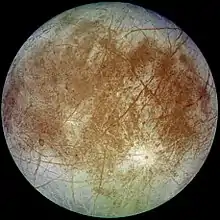 | |||||||||
| ရှာဖွေတွေ့ရှိခြင်း | |||||||||
|---|---|---|---|---|---|---|---|---|---|
| ရှာဖွေတွေ့ရှိခဲ့သူ | ဂယ်လယ်လီယို Simon Marius | ||||||||
| ရှာဖွေတွေ့ရှိသည့် ရက်စွဲ | ၁၆၁၀ ဇန်နဝါရီ ၈[1] | ||||||||
အခြားအမည်များ | Jupiter II | ||||||||
| ပါဝင်အရာဝတ္ထုများ | Europan | ||||||||
| ပတ်လမ်း ဂုဏ်အင်များ[2] | |||||||||
| Epoch 8 January 2004 | |||||||||
| Periapsis | 664862 km[lower-alpha 1] | ||||||||
| Apoapsis | 676938 km[lower-alpha 2] | ||||||||
ပျမ်းမျှ ပတ်လမ်းအချင်းဝက် | 670900 km[3] | ||||||||
| ပတ်လမ်း ဗဟိုကျမှု | 0.009[3] | ||||||||
ပတ်လမ်း ကာလ | 3.551181 d[3] | ||||||||
ပျမ်းမျှ ပတ်နှုန်း | 13.740 km/s[3] | ||||||||
| ပတ်လမ်း တိမ်းစောင်းမှု | 0.470° (to Jupiter's equator) 1.791° (to the ecliptic)[3] | ||||||||
| ဂြိုဟ်ရံလများ | ဂျူပီတာဂြိုဟ် | ||||||||
| ရုပ်ပိုင်းဆိုင်ရာ ဂုဏ်အင်များ | |||||||||
ပျမ်းမျှ အချင်းဝက် | 1560.8±0.5 km (0.245 Earths)[4] | ||||||||
မျက်နှာပြင် ဧရိယာ | 3.09×10⁷ km2 (0.061 Earths)[lower-alpha 3] | ||||||||
| ထုထည် | 1.593×10¹⁰ km3 (0.015 Earths)[lower-alpha 4] | ||||||||
| အရွယ်အစား | (4.799844±0.000013)×1022 kg (0.008 Earths)[4] | ||||||||
ပျမ်းမျှ သိပ်သည်းဆ | 3.013±0.005 g/cm3[4] | ||||||||
မျက်နှာပြင် ဒြပ်ဆွဲအား | 1.314 m/s2 (0.134 g)[lower-alpha 5] | ||||||||
အင်နားရှားကိန်း | 0.346±0.005[5] (estimate) | ||||||||
လွတ်မြောက်အလျင် | 2.025 km/s[lower-alpha 6] | ||||||||
လှည့်ပတ်ကာလ | Synchronous[6] | ||||||||
ဝင်ရိုးတိမ်းစောင်းမှု | 0.1°[7] | ||||||||
| Albedo | 0.67 ± 0.03[4] | ||||||||
| |||||||||
မြင်သာသော အရွယ်အစား | 5.29 (opposition)[4] | ||||||||
| လေထု | |||||||||
မျက်နှာပြင် လေထုဖိအား | 0.1 µPa (10−12 bar)[9] | ||||||||
မှတ်စု
- Periapsis is derived from the semimajor axis (a) and eccentricity (e): a(1−e).
- Apoapsis is derived from the semimajor axis (a) and eccentricity (e): a(1+e).
- Surface area derived from the radius (r): 4πr 2
- Volume derived from the radius (r): 4/3πr 3
- Surface gravity derived from the mass (m), the gravitational constant (G) and the radius (r): Gm/r 2
- Escape velocity derived from the mass (m), the gravitational constant (G) and the radius (r):

ကိုးကား
- Blue၊ Jennifer (9 November 2009)။ Planet and Satellite Names and Discoverers။ USGS။
- JPL HORIZONS solar system data and ephemeris computation service။ Solar System Dynamics။ NASA, Jet Propulsion Laboratory။ 10 August 2007 တွင် ပြန်စစ်ပြီး။
- Overview of Europa Facts။ NASA။ 26 March 2014 တွင် မူရင်းအား မော်ကွန်းတင်ပြီး။ 27 December 2007 တွင် ပြန်စစ်ပြီး။
- Yeomans၊ Donald K. (13 July 2006)။ Planetary Satellite Physical Parameters။ JPL Solar System Dynamics။ 5 November 2007 တွင် ပြန်စစ်ပြီး။
- "The Galilean Satellites" (1 October 1999). Science 286 (5437): 77–84. doi:. PMID 10506564.
- "Evidence for non-synchronous rotation of Europa" (1998). Nature 391 (6665): 368–70. doi:. PMID 9450751. Bibcode: 1998Natur.391..368G.
- Bills, Bruce G. (2005). "Free and forced obliquities of the Galilean satellites of Jupiter". Icarus 175 (1): 233–247. doi:. Bibcode: 2005Icar..175..233B.
- McFadden, Lucy-Ann; Weissman, Paul; Johnson, Torrence (2007)။ The Encyclopedia of the Solar System။ Elsevier။ p. 432။ ISBN 0-12-226805-9။
- McGrath (2009)။ "Atmosphere of Europa"။ in Pappalardo, Robert T.; McKinnon, William B.; Khurana, Krishan K. (eds.)။ Europa။ University of Arizona Press။ ISBN 0-8165-2844-6။
- Chang၊ Kenneth။ "Suddenly, It Seems, Water Is Everywhere in Solar System"၊ New York Times၊ 12 March 2015။ 13 March 2015 တွင် ပြန်စစ်ပြီး။
- Europa: Another Water World?။ Project Galileo: Moons and Rings of Jupiter။ NASA, Jet Propulsion Laboratory (2001)။ 21 July 2011 တွင် မူရင်းအား မော်ကွန်းတင်ပြီး။ 9 August 2007 တွင် ပြန်စစ်ပြီး။
- Europa။
| ဂြိုဟ်ဆိုင်ရာ ဂြိုဟ်တုများ |  | ||||
|---|---|---|---|---|---|
| အခြား ဂြိုဟ်တုများ |
| ||||
| အကြီးဆုံး ဂြိုဟ်တုများ (ပျမ်းမျှအချင်းဝက် ≥ ၁၀၀ ကီလိုမီတာ) |
| ||||
| |||||